
Exercises and methods for the well-being of young people

Exercises
Here are exercises and activities that you as a leader can do with your group. The exercises will spark conversations, raise awareness about your wellbeing and create an inclusive environment.
Methods
Here you can read more about proven methods that help you as a leader to build over time a safe arena for children and young people to talk about their well-being.

Action plan in case of concern
There is a template developed by the Swedish Football Association for dealing with issues of concern for children and young people. To effectively provide support to its leaders, an association needs to appoint a person for safeguarding issues. This person can be a board member, a secretary, a leader or a parent. Guidance for this person can come from RF-Sisu.
In the next step, leaders in the association must be informed about the action plan. This should preferably be done in connection with a leadership meeting so that any questions can be answered. The aim is for the association’s leaders to be aware of the action plan and where to find it.
Here’s what you can do:
- Find out if the association you work in has an action plan in case there are concerns about the well-being of a child.
- Inform the Board of the benefits of having an action plan as described above.
- Otherwise, create your own action plan within your leadership team to collectively be confident in the management of concerns in the group you are responsible for.
Flowchart
Reading aloud
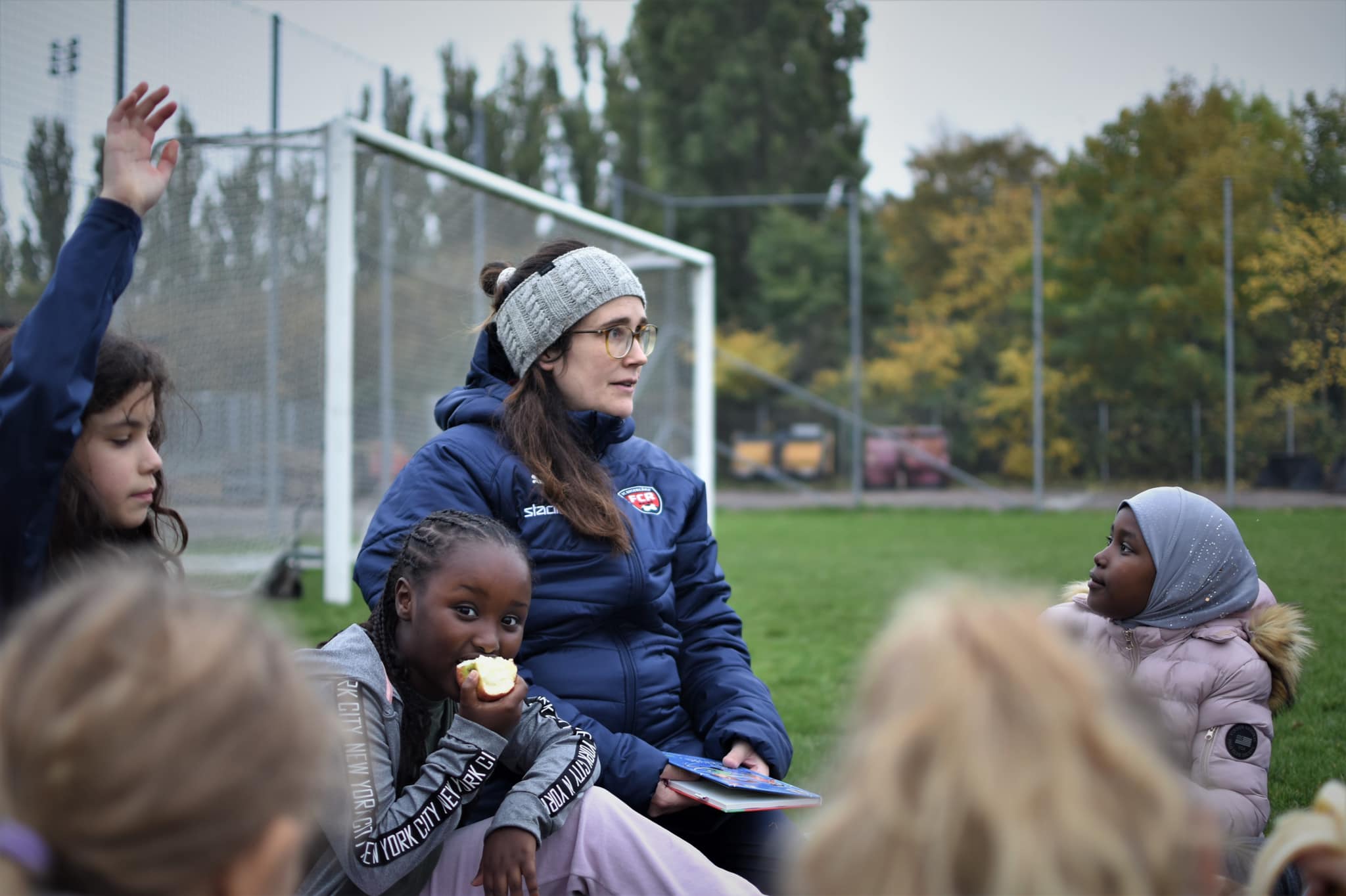
Since 2019, FC Rosengård has been conducting read-aloud sessions with our youngest groups. The number of groups that regularly read aloud from a book before their activity has grown over the years. With read-alouds, we create three positive effects for our youngest players:
- Increased literacy, interest in reading and improved vocabulary.
- A forum to discuss topics such as emotions, being a good teammate or how to work together as a group
- Better focus on training when the children have had a moment to gather, listen and talk.
Here’s what you can do:
- Talk to your fellow leaders if there is interest in organizing an activity like reading aloud in the group you are in charge of.
- Ask your association to contact RF-Sisu for help and support to initiate reading aloud.
- Find out what books are available that are suitable for the group you are responsible for.
- Check with your association, colleagues or parents if you can get support to organize some fruit to eat during read-aloud sessions.
- Inform the children and parents that you will start the activity by reading aloud together from a book.
Values-based work
Many associations have a set of values formulated by the board. However, this does not necessarily result in concrete actions in everyday life. However, the values can provide a very simple and valuable starting point for active work on mental health issues.
A good first step is for the leadership team to concretize how the values will be lived in everyday life. For example, the value “Joy” can be used to create a routine after training when everyone in the team shares one thing that made them happy during the day. You can also adapt your leadership behaviors and focus on development and the joy of competition to reduce negative stress due to results and too high expectations.
Here’s what you can do:
- Find out if the association has a set of values, and if so, familiarize yourself with them.
- If the association does not have a set of values, create one together with fellow leaders, where one of the values is linked to mental health.
- Work out with your leadership colleagues how you can use the values in your day-to-day work, for example, in decisions about possible competitions.
The equal value of all
In FC Rosengård, people of over 70 different nationalities train and play. We see everyone’s equal value and welcome as many people as possible to try sport, in our case football. We work actively to create long thresholds for children and families, with no or little experience of association life, to become members. For us, membership of an association is a first step to participation in society when you are far from it.
FC Rosengård achieves this by making information available in more languages than Swedish and English, lowering financial thresholds for participation through low fees and help from funds. In addition, we conduct outreach activities in schools in the local area to arouse interest and convey the added value of being part of an association – for children and for adults.
How can you get involved in this issue?
- How can you lower the thresholds for participation in your activities? Materials to borrow or offer taster sessions?
- Can you conduct outreach activities, such as visiting schools?
- Information about your activities can be available in several languages to reach people who have not yet learned Swedish.
- Communicate your values, telling everyone that they are welcome.
- How does an association reach children when a new refugee accommodation has opened in the area?

Objectives related to mental health
It is a common practice in groups, whether in sport or other activities, to formulate common objectives. In sport, these objectives often consist of performance objectives and sometimes some social objectives. We have had positive experiences with formulating at least one objective linked to well-being and mental health. Examples of this could be: “We will look after each other’s well-being at all gatherings” or “We will create an open communication climate where we can talk to each other about our feelings and our well-being”.
A major advantage of well thought-out and well-executed goal setting is that it leads to regular follow-ups. In this way, conversations about mental health are maintained throughout the life of the group.
Here’s what you can do:
- At the beginning of the season, hold a meeting with the children/young people to formulate objectives together.
- Think of different categories for different objectives and earmark one of these for mental health.
- Decide in the leadership team on one or two measurement points for the objectives. Make sure you do the same for the mental health objective.

Code of conduct
A code of conduct is good to have, whether you are training a team, a collective training group or individuals.
The idea behind a code of conduct is to clearly articulate which behaviors are expected of one and which are not accepted in and by the group. Through a common code of conduct, we as leaders create the framework to ensure that all members of the group feel safe.
A good code of conduct can be short and concise. Also consider making it visible in the context of the activity, for example in a meeting room.
Here is an example of a code of conduct
Respect and Inclusion
- Respect everyone: Treat others with kindness and respect.
- Positive attitude: Keep a positive attitude and support your peers.
- Inclusion: Include everyone, regardless of differences.
Commitment and Effort
- Participate regularly: come to the activities as often as you can.
- Give your best: Put effort into every activity.
Safety and Well-being
- Follow safety rules: Think about your own safety and the safety of others.
- Be healthy: eat well, drink water and rest.
Conduct and Behavior
- No bullying: Be kind and avoid abusive behavior.
- Use respectful language: be careful with your words.
- Play fair: Be honest and follow the rules.
Here’s what you can do:
- Present to the group and leaders the idea of creating a common code of conduct. Be clear about why a code of conduct is good to have and how it is important for the safety of members.
- Invite the members of the group to come up with ideas on what should be included in the code of conduct.
- As leaders, you can then complement the code with your own points to ensure that all aspects of the group’s behavior are covered by the code of conduct.
Communication plan when someone in the group is feeling unwell
It is normal for the well-being of members of a group to go up and down over time. Should an individual in the group feel unwell for a period of time due to something that has happened in the family or something else that affects their wellbeing, it is good to have an action plan in the leadership group. This makes it easier for leaders to deal with the situation in a supportive way.
Here is an example of a communication plan
1. Immediate response
Private conversations: Have a private and empathetic conversation with the athlete to understand their situation and needs. Make sure the player feels heard and supported.
Privacy: Respect the privacy of the active person by not disclosing more information than they feel comfortable with. Build trust.
2. communication and awareness
Inform leaders: Without revealing details, inform fellow leaders that a member is going through a difficult time. Encourage empathy and support.
Involve close adults: Communicate with the active player’s parents or guardians to agree on the best ways to support the player during this period.
3. emotional support
Assign a support person: Assign the active player a coach or team manager as the main contact person for the player to turn to for support.
Regular follow-ups: Schedule regular follow-ups to offer continuous support and update the picture of player well-being.
4. Adaptations in activities/training
Flexible participation: Allow the person to take breaks or adjust their participation in activities, trainings and matches based on what they feel comfortable with.
Reduce pressure: Reduce the pressure to perform and focus on enjoyment rather than competitive success.
5. long-term follow-up
Ongoing follow-up: Continue to follow up over time and be responsive to any changes in their needs.
Feedback loop: Encourage the player to provide feedback on how the coaches and team can provide better support, to ensure the approach remains effective and responsive.
Here’s what you can do:
- Present the idea of the action structure to your management colleagues.
- Use the template above and adapt it to your environment.

Self-compassion
Self-compassion is treating oneself with the same kindness, understanding and care that one would offer a close friend or loved one, especially during moments of failure, suffering or difficulty. It contrasts with self-criticism, which means being hard on yourself when things go wrong.
Practicing self-compassion in everyday life requires that children and young people have internalized the approach. As a leader, you can contribute to this by adopting a language that reflects the importance of being kind to oneself. Examples of everyday situations where you as a leader encourage the active person to treat themselves with compassion are:
- “What would you say to a close friend in the same situation?”
- “Can you rephrase your critique to focus on improvement?”
- “Talk to yourself in a friendly way, just like you do with a close friend.”
- “What can you do to be kind to yourself right now?”
Together with your leadership colleagues, you can build a forgiving environment where participants know it is ok not to succeed. Emphasize the effort and the attempt rather than the outcome. It is easier for children and young people to be kind to themselves when they know that their leaders understand that learning takes time and failure is part of the path to development.
Knowledge and skills
In the Knowledge section, you can use short texts to refresh your knowledge on recurring mental health topics.

What is mental health?
Mental health is a concept that encompasses both the positive and negative dimensions of well-being. The positive dimension includes well-being and good social relationships. Well-being is influenced by one’s experience of life, quality of life and ability to experience happiness. Good social relationships are based on a sense of belonging to society and close, secure ties with others.
The negative dimension includes feelings of anxiety and depression. Psychiatric diagnoses such as depression or eating disorders also fall within the negative dimension.
Mental health is not static. Biological factors play a role but our experiences are another important and changing factor. There are risk factors for poor mental health, such as formative experiences in childhood but also things that happen in adulthood. However, the impact of these is reduced by protective factors in our lives.
In summary, mental health is about your ability to cope with life’s ups and downs and how you feel and enjoy life.
Protection factors
- A good friend
- A good working environment at school or at work
- Activities or a hobby that you enjoy
- Good and healthy habits (good diet, regular exercise, enough rest and sleep)
Risk factors
- Economic difficulties
- Conflicts in close relationships
- Growing up in an abusive household
- Feeling of not being accepted or not fitting into the norm

Interview tips
How you feel can be perceived as a very private matter. This also makes conversations about how someone is feeling difficult. A human reflex in these conversations is to want to help, and to do so by identifying problems, suggesting solutions or giving good advice. It can also make us feel good about ourselves.
However, the person we are talking to about their well-being expects a different role from us. In such conversations, we should therefore adopt an active listening approach so that the other person feels heard and understood.
It takes an active effort to change our approach.
Some simple tips for talking to young people who express emotions:
1. I am glad that you are telling me this.
A common mistake is to minimize or rephrase the feelings that the young person tells us about. Instead, as leaders, we should pay attention to the feeling expressed and appreciate that the young person wants to talk to us.
2. I believe you.
The way to have a good and supportive conversation is therefore to first say that you are happy that the young person is talking to you (“I am happy that you are telling me this”).
3. tell us more.
Then you can continue by confirming that you believe the feeling is real and important (“I believe you”). We can then invite the person to elaborate (“Tell me more”).
The importance of your role
Many young people have close friends in connection with their activities. Often, participation starts with having a close relationship with someone who is already active. It is therefore easy to assume that these relationships alone are important for those who are active.
However, it has been shown that children and young people also consider relationships with their leaders to be very important. The importance of positive and secure relationships with adults has a major impact on young people’s well-being. Being seen, supported, helped and praised by adults strengthens relationships and at the same time increases young people’s motivation for the activity. Young people want to feel seen and appreciated – often, as an association leader, you are also an important adult contact person outside the family.
One way to build a good relationship with the active person is to show interest and ask questions about their everyday life. This creates trust, which in turn increases the likelihood of the person sharing if they are feeling unwell.

stress
Stress is a natural reaction to challenging or demanding situations and affects people of all ages. The way stress manifests itself or is experienced is highly individual and can be experienced very differently. Stress has evolved to help humans cope with dangerous situations and helps us to react quickly. Although short-term stress can be beneficial, chronic stress is detrimental to our health. Physical reactions can include headaches, high blood pressure or a weakened immune system. In addition, over time, people may start to suffer from anxiety and depression or have difficulty concentrating. Stress can also lead to behavioral changes such as overeating, increased alcohol intake and social withdrawal.
Stress is often triggered by things that happen in our daily lives. These can be school assignments, exams or workload. Major life changes such as moving house, changing schools, losing a loved one or separation are also common causes of stress. The same goes for conflicts with family, friends or partners. Suffering from health problems such as chronic illnesses or injuries can also contribute to feelings of stress.
To effectively manage stress, there are different strategies:
- Exercise: Regular physical activity releases endorphins that lift your mood.
- Sleep: Ensure quality sleep every night.
- Social support: Talk to friends, family or a coach or other counselor.

Emotions
Emotions are complex experiences that involve both bodily and mental processes. They play a central role in our lives and influence how we think, act and relate to other people. Emotions can vary in intensity from mild to strong and can be experienced as pleasant or unpleasant.
Emotions are part of our mental and biological system and help us react to our environment. They can occur in response to external events as well as to our thoughts and memories. Often, our emotions cause short-term changes in the body, such as increased heart rate, sweating or muscle tension. These changes are controlled by the autonomic nervous system and prepare the body to deal with different situations. Emotions can influence how we behave. Fear makes us avoid danger, while joy can make us laugh and seek social interaction.
Here are some examples of areas where emotions affect us:
- Decision-making: Emotions can influence our choices by evoking positive or negative feelings towards the options we are considering. How we feel about different options then influences the choices we make.
- Social interactions: Emotions affect how we relate to other people. They can improve or worsen our relationships depending on how we express and manage them.
- Health: Our emotional state can have a direct impact on our physical health. Negative emotions can contribute to health problems, while positive emotions can improve our well-being.
- Motivation: Emotions can drive our behavior and motivation. Fear motivates us to avoid danger, while joy can drive us to seek experiences that bring us pleasure.
Managing your emotions is an important skill for your mental health and well-being. There are some strategies that can help:
- Mindfulness: Being aware of your feelings without judging them can help manage stress and increase emotional control.
- Expressing feelings: Talking about your feelings with someone you trust can reduce emotional strain.
- Physical activities: Exercise and other physical activities can help release tension and improve mood.
Performance anxiety
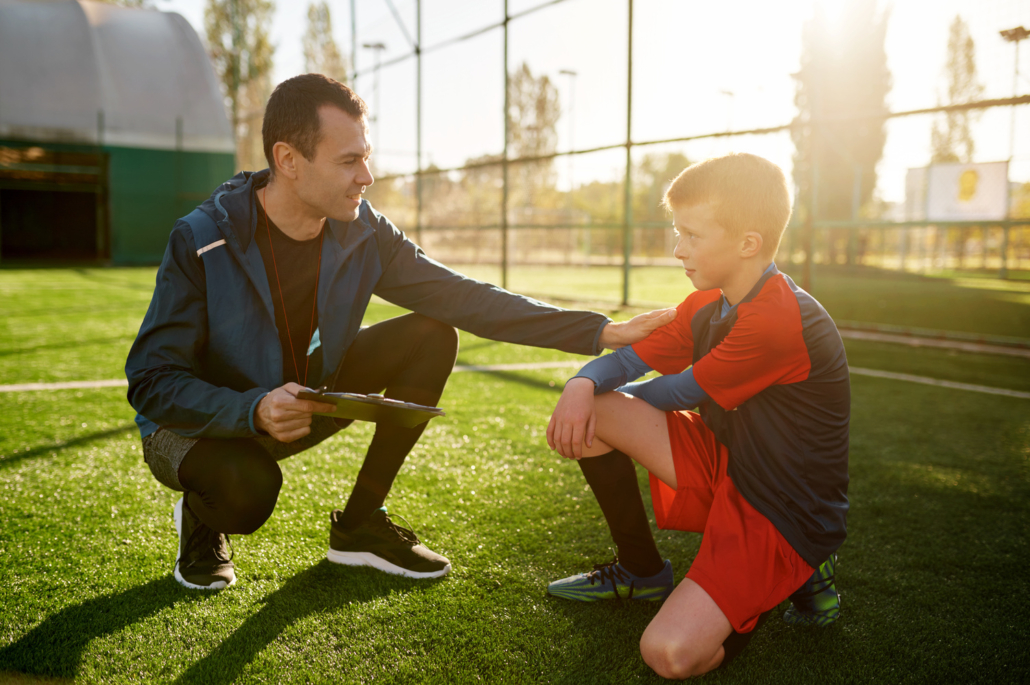
As a coach of young players, it is important to be able to identify symptoms of performance anxiety. Pay attention to how the individual talks about themselves, their performance and their role in the team. It can be a sign of performance anxiety when the player often expresses himself negatively about himself.
Anxiety is experienced as a strong feeling of fear, worry or panic. Players may experience physical symptoms such as a rapid heartbeat, dizziness, sweating, body tremors, difficulty breathing, an upset stomach, tunnel vision, nausea, etc.
You can help and prevent performance anxiety by creating a supportive environment. Allow for open communication and include prevention measures. You should also emphasize the importance of effort and improvement. Encourage an environment where mistakes are seen as opportunities to learn and grow. Provide regular feedback that highlights progress and celebrates achievements, no matter how small. By fostering a positive and encouraging atmosphere, we can help prevent anxiety and improve the athlete’s self-confidence.
If you suspect that someone may be suffering from performance anxiety, you can ask any of the following questions:
- How do you feel about your ability to do the sport?
- Have you, on more than one occasion, experienced an attack of sudden anxiety, fear, discomfort or unease even in situations where most others would not feel this way?
FC Rosengård
x Tim Bergling Foundation
Since 2022, FC Rosengård and the Tim Bergling Foundation have been collaborating on mental health among young people. The collaboration has taken the form of training, panel discussions and workshops on mental health, both in their own activities and externally. Now we have jointly developed the Well-being Arena with tools for leaders in the Swedish association life to support mental well-being among young people.
FC Rosengård
Mental health problems among young people have increased significantly in recent years. As a major sports player, the association feels a responsibility to open up for dialog and work to remove the stigma around mental illness. Education and discussion are necessary to create change, understanding and security. Therefore, FC Rosengård’s main focus is to educate, both internally and externally, in mental health.
Tim Bergling Foundation
Tim Bergling – also known as Avicii – was one of the most celebrated and beloved producers, artists and songwriters of our time. The Tim Bergling Foundation, founded by his parents Klas Bergling and Anki Lidén, works actively with various initiatives and with the goal of preventing mental illness among children and young people.


